

Isolation Solutions
Some ideas for using gobos, isolation booths, and other sound-stopping strategies in the studio
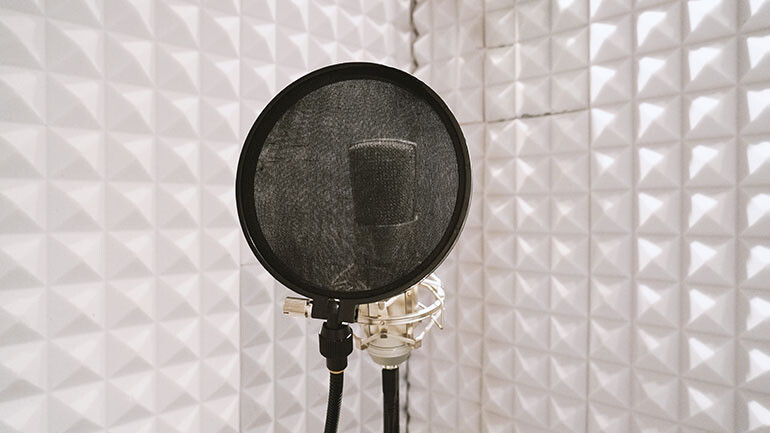
Recording with a group of musicians in a smallish workspace can be a hit-or-miss proposition—unless it’s an all-acoustic session, there’s a good chance you’re going to have some “spill” from the different instruments wandering into the various microphones. Hence, creating a dedicated spot to record vocals, or getting some separation between the players, can be helpful when it comes time for mixing.
When using a standalone device such as a vocal booth or gobo, the objective is to keep the mic isolated from nearby instruments and/or amplification (or, in the case of a solo singer, to prevent room reflections from entering the vocal mic). Here are some ideas for using gobos, isolation booths, and similar solutions in the studio, including those you can purchase as well as assemble from household materials.
Gobos and iso-booths. There are different kinds of sound-stopping mechanisms to choose from, each with its own method of keeping leakage at bay. If you’re simply trying to prevent the sound of an instrument amplifier from wandering into the drums or vice versa, a gobo is your best bet. So named because they’re meant to “go between” the sound sources you want to keep separated, gobos (also known as sound baffles) are vertical or horizontal screens adorned with fabric for absorbing rather than reflecting sound waves. Gobos can be placed wherever you feel works best, such as a few feet away from a bass amp or kick drum to help contain low-end leakage, or between players to maintain some semblance of isolation on the multitrack.
By comparison, an isolation or vocal booth (or “iso-booth”) is situated directly in front of the singer and vocal mic. In the old days when live recording was more commonplace, these booths resembled portable rooms, extending all the way to the ground and enclosed on all sides, with a small window built in so the singer could see into the studio. Nowadays purpose-built isolation devices are much simpler and smaller, generally only covering the upper half of the vocalist.
Is it necessary to use an iso-booth at all times? Not really—since the main goal is to keep nearby sounds from intruding (such as when recording with others live in the same room) there’s no real reason to isolate yourself when it’s just you. Some argue that having an iso booth helps deter unwanted room reflections; however, if your workspace has not yet been properly “tuned,” then your vocal sound is the least of your problems. Before getting a vocal booth, then, consider spending some time and funds on soundproofing materials that will help quell flutter echoes or other sonic annoyances—if your room sounds good, your vocal will too, booth or no booth.
Low control. In the never-ending battle to keep your sounds to yourself, bass is usually the most formidable adversary. Which brings us to another sound-stopping mechanism—so-called “bass traps,” which might include a large cardboard box, or perhaps an empty speaker cabinet, placed in the vicinity of a bass drum or bass amp to absorb those challenging low-frequency signals. Keeping low-end sources off the floor will help as well—even a basic wooden stand for amps will help significantly reduce signal transfer.
Makeshift separators. If you’d like to record vocals live with a group of players but are concerned about uncontrollable leakage, you could consider building your own baffling. For instance, a basic gobo consists of a simple frame made from 2x4’s, with squares of sound-stopping substance (such as homasote) fitted inside, then covered with fabric (and perhaps with a few casters on the bottom for easy maneuvering).
However, if you just need to throw something together quickly and cheaply, there are a number of household solutions you could try. For a basic DIY baffle, simply lay a pair of adjoining 4x4 sheets of thick cardboard on the floor, then fasten them together using several layers of strong gaffer tape, allowing them to fold around a vocalist, amplifier or player. For extra substance, drape some blankets, thick towels or other absorbent materials over the sides of the baffling. And in a pinch, a few pieces of strategically placed furniture (such as a small couch or upholstered chair) can themselves act as makeshift gobos.




Community
Connect with BMI & Professional Songwriters