

The Experts at Songstats Discuss Building Your Song’s Momentum
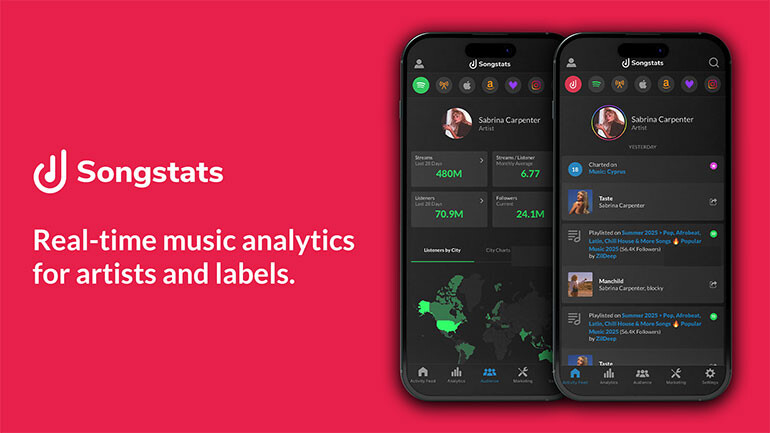
Music creators have access to more performance data than ever but knowing which signals matter and what to do when momentum begins is still a challenge. In this Q&A, BMI speaks with the team at Songstats about how songs build momentum across playlists, streaming, social media, charts and radio. The conversation looks at the data artists and songwriters should pay attention to, how to recognize meaningful growth, and the practical steps creators can take to leverage those insights for marketing, networking, collaboration and long-term fan growth.
1. From what you see across the artists and catalogs that you track, what are the strongest signals that a song is starting to build real momentum today?
Different genres tend to have different starting points for momentum. What’s interesting today compared to the past is that momentum is less commonly initiated by the industry (labels, or radio). Instead, momentum now typically begins on platforms like TikTok, Spotify or Instagram.
Some of the most significant signals include:
- Editorial Playlist adds
- Algorithmic support
- Rapid increase in the number of user-generated videos on TikTok or Instagram
- Shazam spikes
- Major DJ support (other DJs playing your tracks live)
- Charting on Beatport or Traxsource
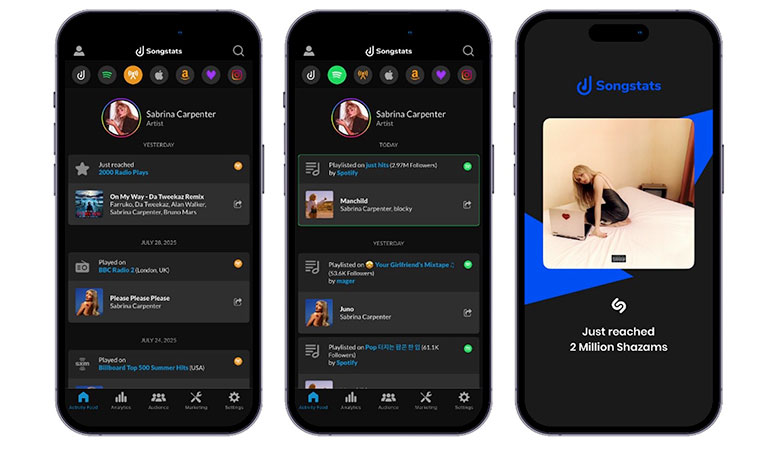
Analytics tools can help creators monitor these signals in one place and receive timely alerts. Platforms such as Songstats send real-time push notifications of important activity across playlist, chart, social, DJ and radio, so artists and their teams can respond while the momentum is still developing.
2. Do you see recognizable momentum pathways (for example: playlists first vs. social first vs. radio/airplay first)? What tends to happen in what order when a song is taking off?
Think of them less as strict sequences and more as feedback loops where one channel amplifies another. Though, there are certainly recognizable momentum pathways, and while they vary by genre and market, most breakout songs follow a few repeatable patterns.
Here are two most common pathways today and what they usually look like in order:
-
1. Playlist → Algorithm Support → Social Media → Radio
- Songs garner early support in playlists (editorial, user generated)
- It gets picked up by auto-play algorithms (Release Radar, Discover Weekly)
- Increased UGC content across TikTok & Instagram using the song
- Momentum spills into radio and subsequently charts
This is the most common pathway across the industry.
-
2. Social (TikTok) → Streaming → Radio
- Short-form song clips go viral.
- Users Shazam and listen across DSPs.
- Streaming platforms react by adding to playlists and charts.
- Radio’s pick up the track.
This is common for breakout songs across genres, as well as giving older songs a resurgence.
Momentum is great for attention, but artists should focus on converting this into retention and grow their fanbase. Strategies for this include: direct-to-fan communications, merch drops, touring and marketing initiatives.
3. What are the top reasons artists & songwriters should be looking at their data?
- Track Growth.
Data is how you know if you’re building and using the right strategies. Key metrics to focus on include streaming growth, social media gains, and radio support - they reveal how many listeners you’re reaching, how many fans you’re converting, and how strongly the industry is backing your music, and in which locations. - Gain networking advantage.
Data isn’t just for bragging rights; it can provide powerful leverage in the music business. Clear performance data can provide useful evidence when negotiating publishing deals, pitching for sync opportunities or discussing royalty advances. - Find collaboration opportunities.
Connect with those who are supporting your songs - from DJs spinning your tracks to artists and songwriters engaging with your music. If someone is already a fan of your work, it’s the perfect icebreaker to start a conversation and build a relationship. - Guide Your Marketing Strategy.
Using real-time insights can help to adjust your ad spend, content, and targeting. If one song is gaining traction in a specific region, double down with ads, social posts, or local campaigns (radio, PR, influencer, curators) to capitalize on the momentum. Spend your budget more wisely and maximize the impact of every marketing decision.
4. What types of data are most valuable for songwriters and why?
Songwriters, engineers and collaborators are often left in the dark when it comes to monitoring the impact of music they played a pivotal role in creating.
- Streaming Metrics
Having the ability to easily see how their songs are being consumed on DSPs and in what territories is great to measure growth and impact. - Social Media / DJ Support
Songwriters can analyze social media stats to see how their songs are resonating. Are fans sharing? Are artists covering? Are DJ’s remixing? Having this data is key for creating leverage and collaboration opportunities. - Radio
Airplay translates directly into revenue for songwriters. It’s key for them to have insight into this, because if plays are not listed in statements, it’s worth investigating with a publisher or PRO. - Data on other artists
Information on other artists’ performance is key in helping songwriters identify collaboration opportunities - both with rising talent, as well as established artists. Songwriters can use the ‘Artists’ recommendation feature in the ‘Marketing’ tab, to surface artists that our algorithm thinks would be a great match. - Master Catalog List
Having their entire catalog listed in one central location is invaluable. Songwriters can easily track and showcase their career-wide performance, which is great for identifying top earning songs, and for pitching (licensing, sync, publishing etc).
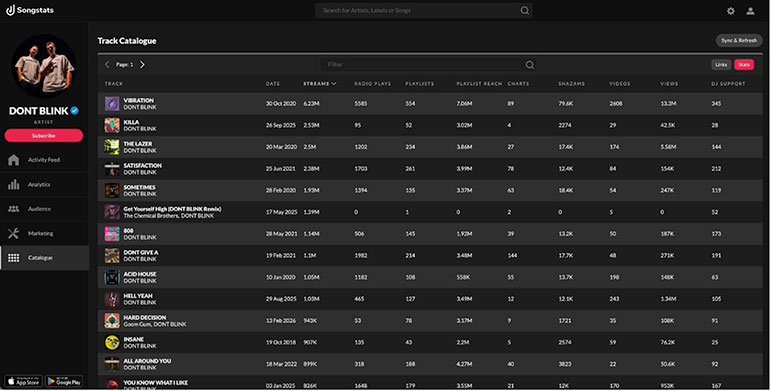
For more information on BMI Partner Songstats, go to: https://songstats.com/. BMI affiliates can visit BMI Spark or sign into your BMI online services portal to receive 15% off any Songstats subscription plan.

Community
Connect with BMI & Professional Songwriters