

Double Tracking Explained
Why double tracking remains among the most potent DIY effects you can use
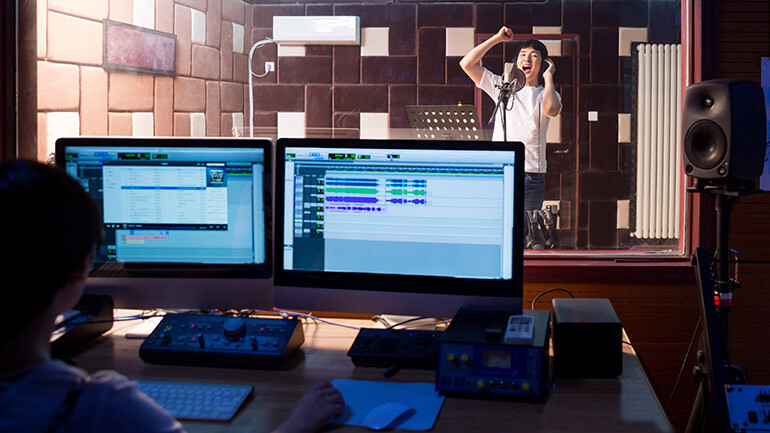
Despite the wealth of automation at our fingertips, manual double tracking—whereby several identical passages are blended together to give the illusion of multiple singers—remains one of the best ways to add heft to vocal recordings. Here we described what double tracking entails, how and where to use it, ways to create an artificially doubled part, and other thoughts.
Double-Tracking Strategies
There are various ways to go about the process of double tracking. Some believe it’s best to let the singer hear the original take and try to match the phrasing and volume; others prefer to mute the main track and allow the performer to just record a second or third pass. For that matter, many engineers will simply let the singer cut a number of different master takes one after the other, then use one of the extras (or portions of each) as the double-tracked part. And while not nearly as prevalent, some may use a device to automatically double the main part, thereby taking the performer out of the equation altogether (more on that in a bit).
Adding Emphasis
The idea behind double tracking is to add emphasis to or highlight a certain section or sections of a song. For example, you might have a single lead vocal through the first verse, then when the chorus arrives, you’d go in and double the vocal part, then revert back to the main vocal with the second verse, and so forth. An extra vocal also works wonders with harmony parts, so don’t forget to double those as well.
Doubling is also effective when used intermittently throughout the song, rather than over an entire section—that is, you might consider applying a second vocal over certain words or phrases or just added in at random intervals. In this case, you would record a second pass as if you were doubling the entire track, only you’d leave the part muted except for specific spots where you’d briefly unmute the doubled track.
Mix Ideas
Placement and panning of a double-tracked part can be a subjective decision, though history provides us with some tried-and-true formulas. By and large a doubled vocal is generally placed directly behind the main vocal in the center of the mix, thereby achieving the desired effect of “widening” the original sound. However, there are plenty of deviations from this approach; for instance, some productions might have two separate vocal takes with one panned left and the other right; for that matter, you could pan some of the double-tracked bits and center the others.
While the term “double tracking” implies two full parts blended together, the composite track doesn’t necessarily have to be mixed at full strength—that is, you may find that using just one-half or even one-quarter of the doubled part provides enough of the desired effect.
Automated Solutions
You might also experiment with various methods and mechanisms for artificially doubling the main part. For instance, you could simply copy and paste the original vocal, adding a millisecond delay plus some equalization or even distortion to differentiate the sound and timbre of the second part. There are also software solutions that emulate the randomness of a manually recorded double, among them Waves Abbey Road Reel ADT, an affordable plug-in based on the original artificial double-tracking formula conceived for the Beatles by Abbey Road Studios’ engineer Ken Townsend.
Still, there’s something unique about combining two actual voices singing the same part, rather than emulating the doubled part. Like most analog activities, the essence of a good double-tracked vocal are the minute variations that occur simply because the singer can’t always match each note and nuance from start to finish. In reality those imperfections are what you’re after when double tracking, so go ahead and try it using the various approaches described above. While it may not work on everything, don’t be surprised if double tracking adds the right kind of thickening to your otherwise bare-bones vocals.




Community
Connect with BMI & Professional Songwriters