

A Conversation with ‘Wuthering Heights’ Composer Anthony Willis
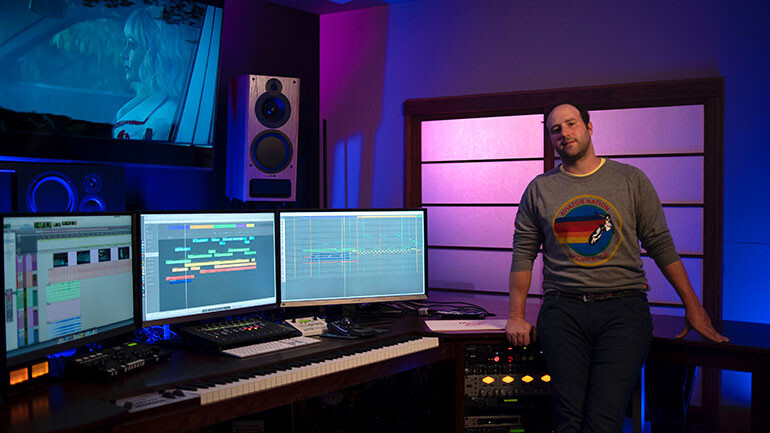
Composer Anthony Willis is one the most highly sought after voices in scoring for film, video games and other visual media. He studied music composition at Marlborough College and the University of Bristol in the UK, before earning his graduate degree from the University of Southern California. Willis has an impressive body of work, including M3GAN, How To Train Your Dragon: Homecoming, The Hive, and additional music for Fortnite, Solo: A Star Wars Story, Jumanji, Pirates of the Caribbean, Wreck it Ralph 1 & 2, The Smurfs, Despicable Me, among several other projects. Recognizing his talent, Emerald Fennell hired Willis to score her 2020 film Promising Young Woman, which went on to receive a Best Picture Academy Award nomination, while earning Willis a BAFTA nomination for Best Original Score. Their second collaboration, Saltburn (2023), brought further acclaim, garnering Willis two WSA nominations, one SCL nomination, two HMMA nominations, and another BAFTA nomination for Best Original Score.
When Fennell asked Willis to contribute to her feature film adaptation of Wuthering Heights, the composer didn’t hesitate to say yes. Currently in theaters and a massive blockbuster around the world, Wuthering Heights has become the first 2026 film to surpass $100 million and reach over $150 million globally in its second weekend.
We caught up with the sought-after composer to find out how he’s made it all work. Here’s what he had to say.
Wuthering Heights is a global hit and the most talked-about film of 2026, thus far. How does it feel to be a part of it?
Having a worldwide theatrical release like this with Warner Bros. is the high point of my career. It is incredible to hear how much audiences have loved the film, many people going to see it multiple times for repeat yearning, laughing, and crying. It’s been a very special project for all of us involved so I’m obviously thrilled to be a part of it, and to support Emerald in bringing her Wuthering Heights to life.
The film famously departs from convention, in many aspects. How did that apply to your score? What was your objective with the music?
The most important aspect for Emerald in terms of the score was the bond between Cathy and Heathcliff. Where in conventional tellings of the story their romance goes unrequited, Emerald wanted to play with that, and explore that fragile zone between hope and despair, warmth and cold, will they versus won’t they, and it’s been wonderful to hear audiences really respond to that emotionally in the score. Of course, stylistically, the film invites a more modern and timeless tone, and so it was fun to explore that in the writing for both the Wuthering Heights and Thruscross palettes where a lot of pulse and momentum is used, especially for lust and romantic tension.
This is your third film with director Emerald Fennell. How would you describe your collaboration together that makes it so fruitful?
Well, with all her collaborators, Emerald’s default mode is excitement and inspiration. She loves to roll up her sleeves and get really into every detail of the film. Some of my favorite and most exhilarating moments have come from her reacting to something I’ve written and then making suggestions on the fly, reshaping it, and then my reacting back to that. I took my rig to the cutting room in London for quite a few days on Wuthering and it really makes such a difference. I think overall we’re both just the right combo of creatively flexible, and completely obsessive, which leads to some fun results!
Can you describe your creative process?
I love responding to the feel of the film, especially its photography. A director can explain what they’re feeling, but I’ve found it most effective when they show you. It really informs so much about what the film is asking for. As composers, we’re so lucky to come into the process to react to the work of so many creatives before us. On Wuthering Heights, the journey starts with Emily Brontë’s iconic words; the performances, sets, costumes, cinematography, and hoe Emerald brings it all together. Ultimately, I try to retain the idea that the audience has a spontaneous two-hour experience. And so, any attempted cleverness in craft must be reckoned in relation to that intuitive feeling, that instant reaction.
You’ve worked across a wide variety of disciplines and provided the music for a host of different projects — from period pieces like Wuthering Heights and thrillers like David Yarovesky’s The Hive to video games like Sony PlayStation’s Knack II and even an installment in the Star Wars canon with Solo: A Star Wars Story. Is there one area of creative expression you feel most comfortable in?
I love any opportunity to help build a world. I think no matter the genre, I feel comfortable when I’ve done my prep work and I have a palette and approach that gets me excited. I think you get into trouble when there’s a tool you can imagine, but it’s not at your fingertips. It’s like an actor in costume and with the right intonation, being ready to look and sound the part is crucial to bringing the audience with you on a journey and creating ideas that will resonate.
What advice would you give to aspiring film composers looking to emulate your success?
I started to feel much more confident in my writing when I had a clearer sense of my preferences. It took some time and definitely some failed experiments in terms of how to articulate them, and then suddenly I found I just knew I’d rather turn left than right. And that allows you to arrive at something you’re going to derive energy back from much quicker than when you’re starting out. That said I think with every new project it takes a little time to rebuild that fluency because on day one, the sky is the limit.
What’s next for Anthony Willis?
I recently finished Blumhouse’s erotic thriller Soulm8te, which has a very romantic score infused with tech, and some exciting projects are coming up soon. Overall, I’m really happy my work on Wuthering Heights and Saltburn especially, is starting to open some really cool avenues, so there’s a lot to be excited about.
What role has BMI played in your career so far?
Composers so often operate on our own, and so the work that BMI does to bring us together as a community and shine a light on our work is incredibly valuable, especially through their presence at the Sundance Film Festival and events like the BMI Film & TV awards (shoutout to BMI’s Tracy McKnight for hosting these so beautifully). And of course, performance royalties for our work and success is an essential aspect of a composer’s business model. We really depend on this to run our studios and to take creative risks.



Community
Connect with BMI & Professional Songwriters