

Chasing Truth: A Conversation with Lachi
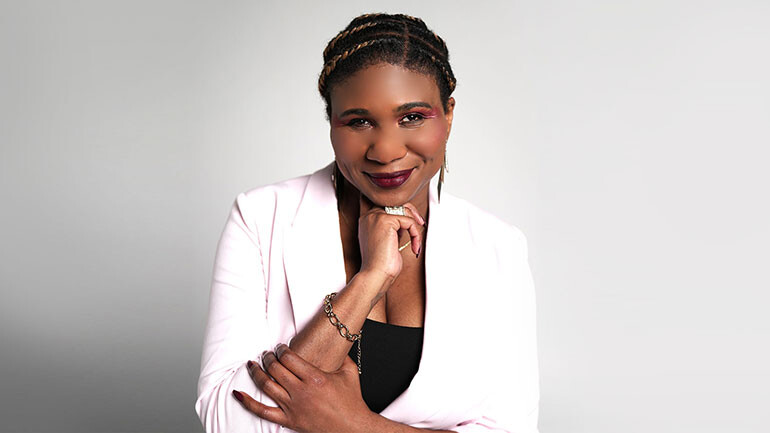
Lachi is a trailblazing recording artist, songwriter, producer, author, and disability advocate. Born legally blind, she uses her voice and platform to champion disability inclusion. At the heart of her work is a commitment to fostering understanding, breaking down stigmas, and celebrating the disability community. Through her uplifting music grounded in authentic storytelling, Lachi empowers listeners to embrace their disabilities as a source of identity and pride.
Her work to reshape how people perceive individuals with disabilities has earned widespread recognition. In 2024, she was named a USA Today Woman of the Year, produced a GRAMMY-nominated album, is a Recording Academy Trustee, as well as features in notable publications including Forbes, Billboard, The New York Times, People, and TIME, among others.
In addition, Lachi founded and sits as the current CEO of the U.N.-recognized organization RAMPD (Recording Artists and Music Professional with Disabilities) which seeks to amplify disabled voices, ensuring that all music creators experience a creative environment that’s marked by inclusivity, equity, and representation of all voices.
Her new album, Magnificent, was recently released on July 10. Here’s what Lachi had to say about the project and her continued efforts in disability advocacy.
Your new album entitled Magnificent was just released this month. What inspired the name of this album?
Historically, the word Magnificent means ‘greatness’ and was used to describe kings and rulers. I named the album Magnificent because I believe every individual was meant to make a significant impact on the world, just as they are, with the natural body-mind in which they came. Magnificent celebrates that we’re all Greatness exactly as we are. Every song invites folks of all ages (with a focus on kids) to embrace difference, reject shame, and recognize that our uniqueness is our greatest strength.
Which of those songs are you most proud of?
My songs are my babies. There’s no one song I’m more proud of than another. However, there are some songs that do have deeper meaning than you get from a simple listen. For example, “Emoji of a Heart” celebrates the different ways we communicate, with the first verse co-written with Wawa Snipe (a deaf rapper and performer) and the second verse co-written with Lateaf McLeod (non-speaking scholar and writer of the award-winning poem “Why Are You Scared of Me”) and sung by me. Mandy Harvey (singer / AGT finalist who is deaf) and I got to put voice to their words, showing that though we communicate differently, we can all express love.
Another song with some depth is “I Like Me.” When I was young, I had to wear these huge Coke-bottle glasses due to my low vision. I was picked on a ton in school for being different, and it caused me to internalize that dislike. I daydreamed a lot to escape. I wanted to be beautiful and famous like the folks on TV, and while my mom supported my love for music, I didn’t have many role models to point to. I came across Lisa Loeb’s music videos and loved that she was a famous girl with big glasses. When researching modern blind artists as I began to pursue music seriously, one of the first folks I found was Raul Midon, among others. So to be in a position in my career where I could call on both Raul and Lisa to join me on “I Like Me” along with my mom speaking self-love words in Igbo (our native language in Nigeria) has been a deep full circle moment.
As the lead producer on “Ask Me” it has a special place; however, the last one I’ll highlight is. “Do I Count.” It’s the emotional heart of the album, asking a question many disabled and marginalized people carry, people with non-apparent conditions, people who feel side-lined. ‘Do I Count’ is one of the album’s strongest pieces of writing (co-written with Andrew Barkan), with strong arrangement, keys from Charu Suri, and it consistently pierces during listening sessions. I hope the song, and every song on the album, reminds listeners that they always belong and always matter no matter how they show up.
You’ve previously said that you live by the following mantra: “Always be truest to the part of yourself that society wants you to be most ashamed of. Because once you can accept that part of yourself — despite what anyone else thinks, does or says — that’s how you win at life.” How is this mantra manifested into this album?
Every song honors the traits we’re often told to hide, whether it’s moving differently (“Moves”), processing differently (“Fidget”), communicating differently (“Emoji of a Heart”), or celebrating differently (“Soy Diferente”). This album turns those differences into joy, confidence, and pride. But even more importantly, this album has over 70 collaborators on the project, with 50+ identifying with disability and neurodivergence in some way, including our stellar production team, myself, GRAMMY-winner Lucy Kalantari, and GRAMMY-nominated duo Andrew & Polly. It’s disability-led disability joy, authentic and unapologetic, in a time where people in power are trying to roll back hard-earned disability rights. It’s a slap in the face to systemic oppression with a smile. Oppression feeds on deep-seated internalized ableism. It says, “Feel shame, feel pathologized, hide your liberation!” This album says “no,” and scampers off.
What would this kind of representation have meant to you if you had an album like Magnificent when you were a child?
It would’ve shown me that I didn’t need fixing to belong. Seeing disability, neurodiversity, and differences celebrated instead of pitied, medicalized and avoided would have helped me embrace who I was much earlier.
And the same goes for so many others who are like me! There are 70+ collaborators on this album. All of them are role models in and of themselves. If I could have looked up to them, and said “Hey, Mommy, Mommy, I can be that.” They would serve as role models not just to me, but to my teachers, to my parents, to other people who didn’t see that future for me. We would be able to talk about it better.
This is really at the core of everything I do. If I’d had Glam Canes when I was younger, I would have used a cane (which I very much needed) younger. If I’d had RAMPD when I was younger, I wouldn’t have spent so much time masking in the music industry out of fear that my disability was going to cost me opportunities. If I’d had my book, I Identify As Blind, as a kid, I would have had was to talk about disability in a fun, positive way.
Are there any artists that have inspired your creative process?
Lauryn Hill is a big inspiration for me. She really elevated Black culture with her album Miseducation of Lauryn Hill. She also talks about deep subjects that I hadn’t really heard before. And so I love to celebrate disability culture through my music and talk about real things in a very clever, very fun, very lyrical way, similar to how she does it. Alicia Keys was another big influence. She showcased that you can do hip-hop and piano at the same time. I rap and play piano, and it’s all thanks to folks like Alicia who made the piano cool. You don’t have to be wearing an ascot to play the piano!
In the kids’ music space, Alphabet Rockers paved the way for having a cause for the music and still making it cool! I’m honored to work with them on the album track “Next Up.”
In 2025, you released the book I Identify As Blind. How has your understanding of embracing blindness as part of your identity evolved over time?
When I was young, I was super shy and quiet. I felt a deep sense of shame as a result of my blindness. Today, I’m a social butterfly, successful and confident. But I’m still blind. So, it just shows that blindness was never the problem. It wasn’t the condition; it was the conditioning. So, I learned that we don’t need to fix me, we need to fix society. I’ve grown to recognize my Big DIS Energy, allowing me to celebrate disability culture, instead of seeing it through a medical or charity lens.
My book encourages people to drop their masks when they drop the stigma. Through humor, history, and pop culture, it gives people real life examples that liberates their disability identity. Accessibility was a huge priority which is why the book is out in large print and audiobook formats, with braille on the cover and dyslexic friendly font. We’re doing everything that we can to really celebrate culture just through the book itself. And it’s getting recognized by Kirkus, Libro.fm, and more!
This album is your debut children’s album, with songs slated for all ages. What inspired you to write something that applies to a younger audience?
Kids deserve good music that reflects the real world, showcases that everyone belongs, and sees them instead of talking down to them. I wanted to create songs that celebrate disability, neurodiversity, and difference, rather than shame. Kids also absolutely deserve role models that look like them or have their situation - role models I didn’t get to have. And for the parents, too! Kids’ internalized ableism often comes from their parents’ attitude toward disability. So, this album gives kids, parents, and teachers a fun way to talk about disability. I find it so much easier to talk to kids about disability because they are so much more open. And when I speak to adults and teachers, they are the ones who are super afraid to talk about it, because they don’t know how to talk about disability except for the charity model, the medical model, and the grievance model.
What are you most excited about for this upcoming album release?
I’m excited to see families, classrooms, and communities sing these songs together. These are really good, well produced songs. I got to work with a really amazing production team with GRAMMY-winner Lucy Kalantari, GRAMMY-nominated duo Andrew & Polly, mixing and mastering engineer Felix Gamarano, immersive mix and masterer Vic Florencia, our label Platoon, and a really great overall team of collaborators, co-writers, musicians, artists, and our whole Barriers for Breakfast club, which was a bunch of folks with different varying relationships to disability, who helped advise us along the way to make sure these songs were sensitive, but also edgy. Everybody from head to toe is an amazing addition to this tapestry that is Magnificent, and I just can’t wait to get that out to the world. If even one child feels seen and one adult rethinks disability, the album has done its job!
What advice would you give to aspiring songwriters?
Write the song only you can write. Don’t chase trends, chase truth. You are a truth, so look inside yourself for the deepest part of yourself, embrace it, and write from there. The more specific and authentic your story is, the more people will find themselves in it.
What role has BMI played in your journey thus far?
BMI has championed my career by supporting my songwriting, creating opportunities to connect with other people in the industry, and recognizing the value of creators. They’ve been an important part of my journey as a songwriter, and the journey of many songwriters, by informing us on how to stay protected and encouraging our creativity.
So, a huge shout out to BMI for having me on this interview and highlighting the work I’m doing through my organization RAMPD, with my book I Identify As Blind, as a National Trustee at the Recording Academy, but most importantly, for supporting so many disabled people by amplifying Magnificent - out now!
Community
Connect with BMI & Professional Songwriters