

Carla Patullo Explores the Therapeutic Power of Music on NOMADICA
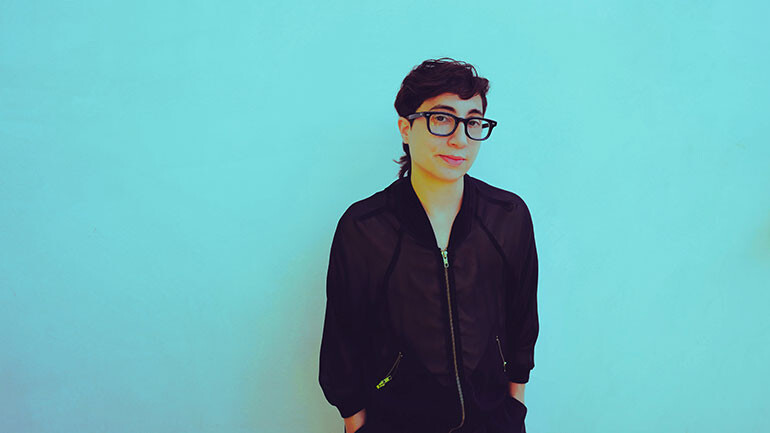
Since embarking on her music career in the 2000’s, Carla Patullo has never shied away from exploring, testing and pushing the parameters of musical expression in terms of both instrumentation and the emotions she conveys. A GRAMMY-winning artist, composer, songwriter and multi-instrumentalist, Patullo has released an accomplished body of work that ranges from the minimalist to the orchestral, the classical to the unconventional and the abstract to the deeply personal. Having earned a bachelor’s degree in songwriting and a master’s in film music from Berklee College of Music, Patullo is unafraid of using everything in her arsenal to fully express herself as a “genre fluid” music creator. After writing over 100 songs with placements in films and TV shows, a stint in the rock band White Widow, three soundtrack albums and an acclaimed, GRAMMY-winning debut LP as a solo artist, she’s been doing just that.
For her most recent work, however, Carla Patullo undertook the most profoundly personal project of all, an intimate album called NOMADICA. This stirring collection of music explores Patullo’s complex emotions with regards to her late mother, who passed away, years ago, in a tragic car accident. The album is the sound of Patullo’s quest, connection, and ultimately, healing and inner peace. BMI caught up with Patullo on the eve of NOMADICA’s release to find out more.
Congratulations on your new album! You’ve said that NOMADICA was born out of profound personal loss, and that you see this album as a means of closure and healing. Given the emotional weight and significance, what was the writing process like?
Writing it was both cathartic and painful! When I began composing the album, I was planning a memorial for my mother. It was the twentieth anniversary of the car accident that took her life. I was young when it happened, and as I approached the age she was when she passed, the grief began resurfacing in unexpected ways—old emotions, but also new ones I hadn’t yet given myself permission to feel. There were moments where the music came out like a flood — almost instinctively, and others where I had to sit with the silence, let myself feel lost, and wait.
The recording process became part of that exploration — a way to sit with those feelings, to translate them into sound. What made this process unique for me was how much it blurred the line between memory and creation. Sometimes I felt like I was having a conversation with my mother through sound — things I never got to say, or that we never got to share. And at other times, the music carried me forward, helping me process what it means to live after profound loss.
In a way, the album became a ritual of healing. It allowed me to be intimate with my mom again. It wasn’t about “getting over” grief, but about creating space for those who have passed, finding beauty in that, and ultimately reconnecting with myself and the world around me. NOMADICA is as much about rediscovering love and wonder as it is about mourning — and that made the writing process incredibly vulnerable, but also incredibly freeing.
You worked with some formidable collaborators on this project, including the Scorchio Quartet and the Tonality ensemble and Martha Wainwright, among others. How did these contributions come together, and what did they bring to the process?
Working with the Scorchio Quartet, Tonality, and Martha Wainwright was truly one of the most moving parts of creating NOMADICA. Each of them brought something deeply personal and alive to the project — not just musically, but emotionally.
I had collaborated with the Scorchio Quartet on my last album, So She Howls, and they continue to amaze me with their emotional openness and willingness to be vulnerable. They don’t just play the notes — they pour their own feelings into the music. Martha Mooke took out her electric viola and crafted sounds that mimicked metal scraping — a sonic texture that became part of the train palette woven throughout the album, echoing the memory of the crash that shaped so much of this work.
Tonality, under the direction of Alexander Lloyd Blake, brought ethereal choral layers that beautifully captured the spiritual core of the songs. Their voices didn’t just accompany the music; they lifted it into something transcendent, something that spoke to grief, memory, and healing on a deeply human level.
Martha Wainwright’s voice has haunted me for years — in the most mesmerizing way. Back in 2012, I had the privilege of performing alongside Rufus Wainwright and Sandra Bernhard in a tribute to Martha’s mother, Kate McGarrigle. When I began working on NOMADICA, I reached out to Wainwright because we share the experience of losing our mothers, and I felt she could bring her raw emotion and depth to the album, in addition to her stunning voice.
We ended up meeting in Woodstock to write and record Fly Under together. Her voice is achingly expressive — a rare blend of vulnerability and beauty — and it brought a richness to the song that I could never have created on my own. I feel deeply honored to have Wainwright and all of my collaborators on this project; they each poured something profoundly human into this music.
What was amazing was how everyone approached the material with so much openness. We weren’t just tracking parts — we were all stepping into the emotional world of the album, holding space for grief, memory, resilience. Their contributions didn’t just elevate the music sonically; they gave it layers of human connection I couldn’t have created alone.
Where did you record the project, and can you give us a little insight into that process?
A lot of NOMADICA was composed and recorded at my studio in Los Angeles, The Soundry, including my own vocals, the choir Tonality, and many of the experimental instrumental sounds that I played with. But in many ways, I was a bit of a nomad while making this album — recording train and nature sounds in the field, traveling to the East Coast to record the Scorchio Quartet at Jungle City Studios in New York, and recording Martha Wainwright up in Woodstock, NY at Utopia Studios, where we wrote the song “Fly Under.” There was something about that movement, that restlessness, that actually mirrored the emotional landscape of the album.
You wear many hats on this project - composer, performer, producer. How do those different roles feed each other and which do you find the most rewarding or challenging?
I might begin composing something and then ask myself, I wonder what that would sound like if I slow down the speed and run it through that amp. As a producer, I’ll start to shape the sound, and then as a singer, I will latch on to that and begin shaping my melodies. There is always something special about the first vocal takes. Oftentimes, there are gems sprinkled throughout musically and lyrically. I think I need to be open and accepting. The collaboration process is the most rewarding. The act of taking all these isolating emotions and harmonizing with others. I also love working with my mixing and mastering engineer, Daniel Kresco, on the final touches. Internally, I am also struggling to let go of the project at this point, but I’m so lucky to have Daniel helping me to get through it!
What advice would you share with aspiring music creators?
Don’t be afraid of the vulnerable places — that’s often where the most powerful music comes from. Be patient with your process, allow yourself to experiment, fail, and evolve. Surround yourself with collaborators and mentors who challenge you but also respect your vision. And maybe most importantly, remember why you started making music in the first place. That connection to yourself, to something bigger, is what will sustain you through the hard moments and make the joyful moments even more meaningful.
You’re on the advisory board for the Alliance for Women Film Composers; can you tell us a little about the work that you’re doing there?
It’s been a great honor to be on the board. My mentor and friend Laura Karpman was one of the founders and it’s been exciting to see it evolve. I have been working with the mentorship program. I have been fortunate to have had amazing mentors throughout my career, and I think mentoring can really strengthen our community. It’s a project with a long-term vision, and I’m happy I get to be a part of it in its current sophomore stage. I hope it continues to evolve as it supports and inspires women composers.
How has BMI played a role in your work?
When I was starting out, I was fortunate to have opportunities like the BMI Composing Workshop and the Sundance Film & Music Lab, which was supported by BMI. It really helped me foster relationships within the music and film community, as well as hone in on my film composing skills. Being in LA, it’s been really great to be connected to such a large and warm community.
Carla Patullo’s NOMADICA is available on August 22.



Community
Connect with BMI & Professional Songwriters