

A Conversation with Hamnet Composer Max Richter
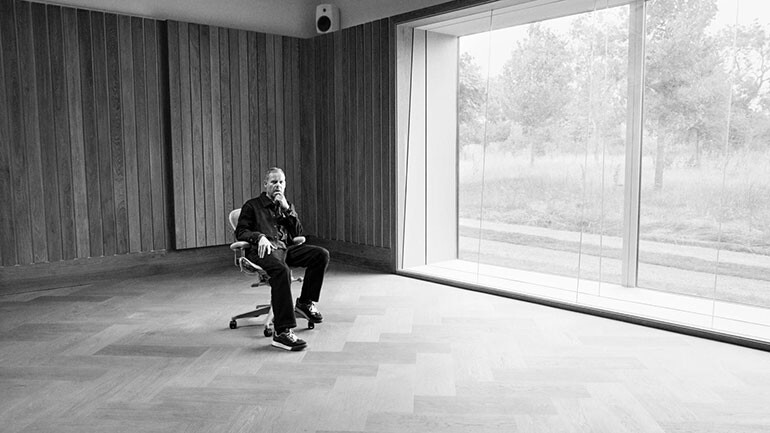
A versatile, multiple GRAMMY-nominated music creator, Max Richter has composed and produced a wide body of work that has taken him across genres and disciplines, writing music for stage, opera, ballet, screens, art installations and beyond. From his background in postmodern, post-minimalist and contemporary classical music, he’s composed 60 scores and released 14 solo albums. He’s collaborated with everyone from Yo Yo Ma to the Future Sound of London. Richter’s music has appeared in films by directors such as Martin Scorsese, Ridley Scott and André Téchiné. His scores for films like Ad Astra, Mary Queen of Scots and Waltz With Bashir earned him international accolades and global acclaim.
Richter’s most recent project is Chloé Zhao’s cinematic interpretation of Maggie O’Farrell’s novel, Hamnet, which delves into the relationship between William Shakespeare and his wife Agnes in the wake of the death of their young son. A rich collaboration with director Zhao, Richter’s music for the film has already been nominated for recognition by the Astra Film Awards, the Hollywood Music in Media Awards, the Critics Choice Awards and the Golden Globes.
BMI caught up with Richter to discuss this ambitious project. Here’s what he had to say.
Your latest project was scoring Chloé Zhao’s cinematic interpretation of Maggie O’Farrell’s novel, Hamnet, which delves into the relationship between William Shakespeare and his wife Agnes in the wake of the death of their young son. Given the emotional complexities of the subject matter and its Elizabethan setting, what informed your approach in writing music for this material?
I wanted the music to let the actors and the psychology of the story speak, without signposting or manipulating. So, the music had to be very transparent. I also wanted it to embody the female principle. The movie is from Agnes’s point of view, so women’s voices and choral writing were a big part of it. I also wanted something that could point to the world beyond, the transcendent. Agnes is very in touch with the earth, and there is a lot of magic and a sense of the undiscovered country. Those were the colours I was working with.
I read that you provided “color studies” to Zhao that ended up being both hugely informative to the whole of the score and that helped created the emotional tone for several scenes in the film. Can you describe your creative rapport with Chloé Zhao, and is this indicative of your collaborative methods on other projects?
Chloé and I met after I read the script and talked about the big ideas in the film: the family relationships, Agnes’s relationship with her children and with Will, and the vertical relationship between the earth and the beyond. She is the fulcrum through which everything is viewed, and the film is seen through her experience. I read the script, was floored, and started thinking about material that could support the story without getting in the way. I made sketches, mostly choral and string orchestra, and sent them to Chloé. She used them on set when filming, scouting locations, thinking about design, and rehearsing, so they became part of the building blocks of the film. When she went into the edit, she used this material, so it was an organic, conversational process between picture and music, moving around and adapting. The score co‑evolved with the edit. It was a fun, easygoing process; Chloé is an amazing collaborator.
You’ve worked on a wide array of films, television series, art, dance and fashion productions – is there a particular discipline that you consider your comfort zone or your sweet spot? How does your creative approach differ from project to project?
Every project has its own timescale and energy, and that’s what’s nice about doing different things. My base camp, the heart of what I do, is the solo records and, more recently, concert music. That’s where I just follow my intuition through the material, doing what makes sense next without boundaries or agendas. I also love collaborating because of that conversational, puzzle‑solving process. Film is the ultimate version of that: it’s the outcome of many people’s creativity and ideas, led by a director’s vision. It’s exciting to be part of that and to keep figuring things out through a series of experiments.
You’ve earned a formidable reputation as an influential, Emmy- and GRAMMY-nominated composer for your innovative merging of classical and technological elements over innumerable scores and genre-defying solo work. As someone who has amassed such a great amount of experience, what advice would you impart to aspirational music creators looking to emulate your path?
I’d say: don’t try to emulate anybody’s path. It’s a busy, noisy world, but there’s only one you. Your experience, biography, the music you heard as a kid, what you love and dislike, your skills and taste, your technical toolkit — that’s your fingerprint. Go deep into that because that is your superpower. It can be a long road getting into music or anything. There will be successes, failures, and things you think are great that no one notices. That’s just how it is. Be realistic about that and do it because you love it.
What’s next for Max Richter?
I’m going back into the concert‑music world. I’m writing a cello concerto and looking at other projects further down the line, reading scripts and seeing what’s out there.
What role as BMI played in your journey thus far?
Having an organization like BMI at your back is fantastic. They provide structural support, advice, counsel, collections - a big reservoir of experience. Especially early in your career, at big decision points, you need to be able to take advice, and BMI is great for that.



Community
Connect with BMI & Professional Songwriters